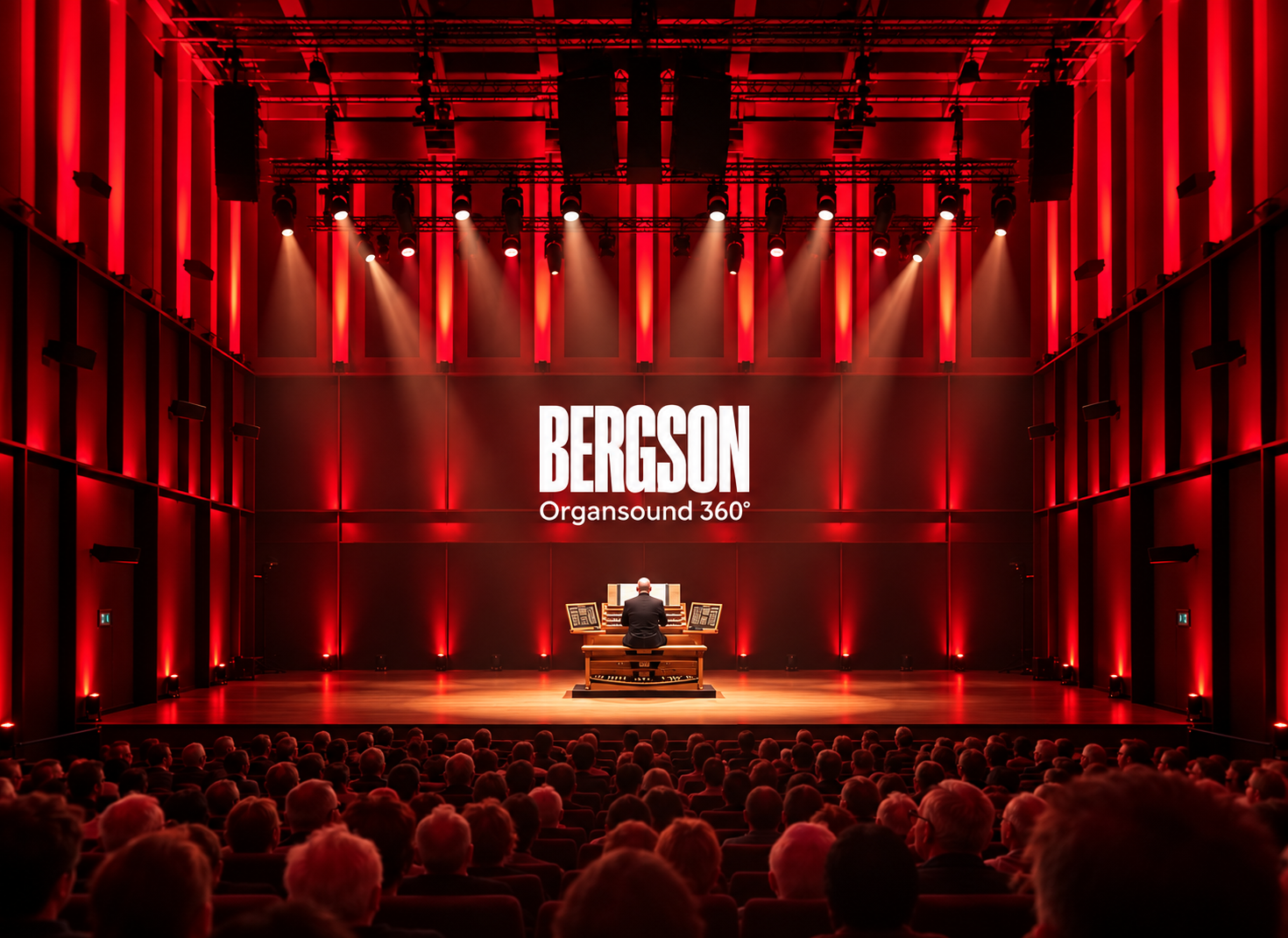
BERGSON 360°
ORGAN SOUND LABORATORY
The “smartest concert hall in Europe,” our Elektra Tonquartier, is conceived as a space for experimentation: We want to offer composers and musicians a setting that’s at the cutting edge. Not as an end in itself, but to push the boundaries of sound and thereby inspire the audience anew. “Orgelsound 360°” is a flagship project whose success with audiences speaks for itself. (Maximilian Maier, Artistic Director of Bergson)
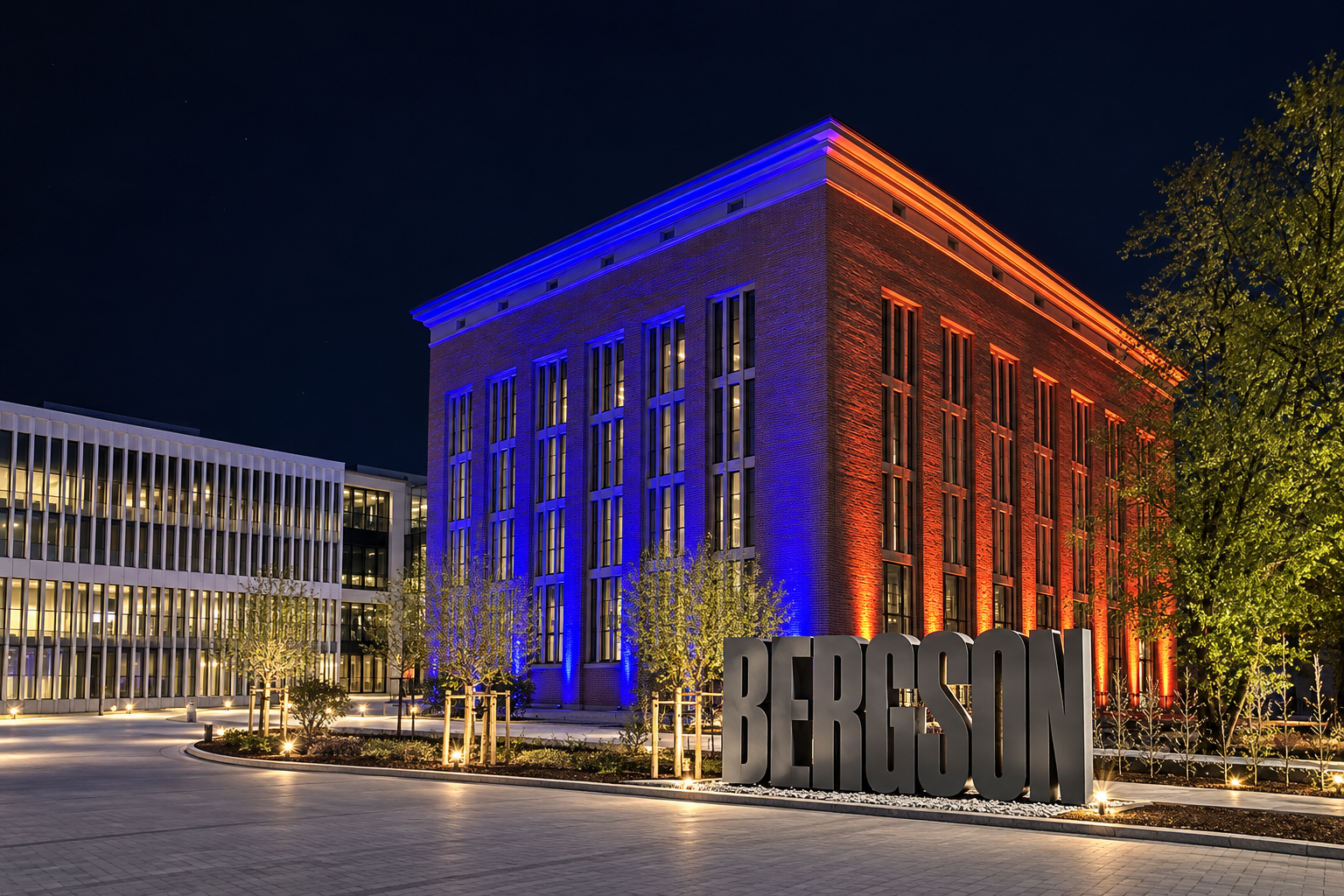
The Bergson Kunstkraftwerk was born from the vision of brothers Christian and Michael Amberger, who acquired the formerly dilapidated Aubing heating plant in 2005 and transformed it from an industrial wasteland into a privately funded cultural venue. Based on an extensive renovation by the architectural firm Stenger2 and a clear cultural-policy concept, the building evolved programmatically around 2019 into the “Bergson Kunstkraftwerk”—featuring a gallery, concert hall, jazz club, and dining options—as a new cultural hub in western Munich.
The Bergson’s concert hall, the Elektra-Tonquartier, features a sophisticated sound system designed by the Munich-based acoustics firm Müller-BBM, which, with 25 microphones and 80 speakers distributed throughout the hall, can create acoustic effects ranging from the dry sound of a Chicago jazz club to the cathedral-like acoustics of Notre Dame in Paris.
After founding three of his own ensembles—the Bergson Phil, the Bergson Voices, and the Jazzrausch Big Band—the only thing missing was a musical instrument that nearly all major concert halls around the world have: a large organ.
And so the idea was born to bring the latest advancements and the very highest technical standards in sampled organs from around the world—made possible by the HAUPTWERK organ system—to the Bergson and experiment with them.
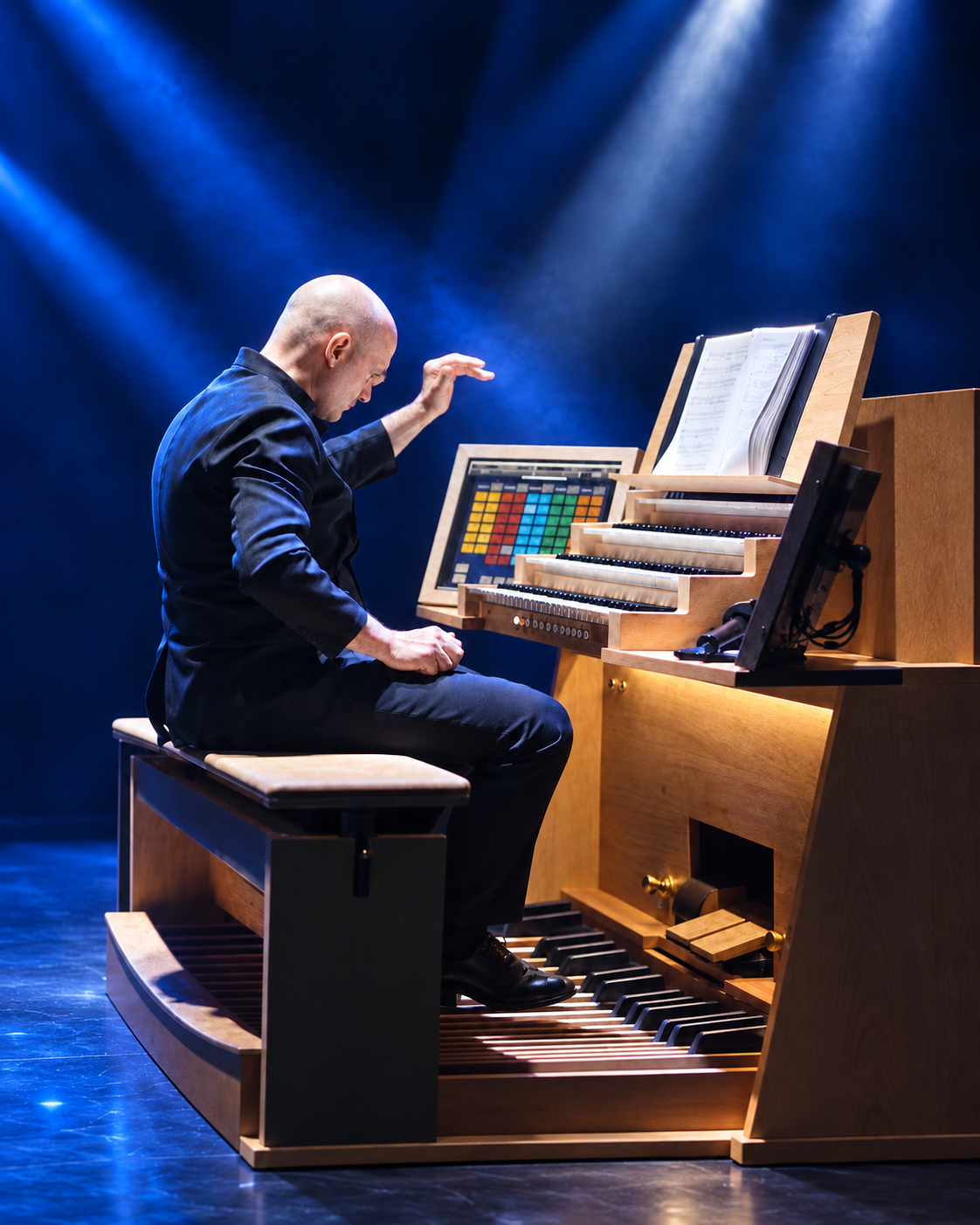
This project kicked off in November 2025 with a sold-out concert as part of “100 Years of the Munich Bach Festival,” which was also the 99th Bach Festival organized by the New Bach Society of Leipzig and brought to Munich by Hansjörg Albrecht. The equipment—consisting of a four-manual organ console and the corresponding sample sets—was provided by Orgelhaus im Stiftland (Waldsassen), whose founders and owners also distribute the HAUPTWERK system, now supply orchestras throughout Europe with it, and are constantly working to further refine the system.
The program consisted exclusively of Bach highlights, including both original works and transcriptions. To showcase the sonic capabilities of the new experimental organ project, Hansjörg Albrecht—the new Bergson Principal Organist—selected sample sets from the top five organ builders, thereby bringing the sounds of the international organ world from the 18th to the 20th centuries to the Bergson. The instruments were:
Germany: Freiberg, St. Petri City Church | Gottfried Silbermann
Netherlands: Zwolle, Grote Kerk | Arp Schnitger
France: Caen, Cathedral | Aristide Cavaillé-Coll
England: Hereford, Cathedral | Henri Willis
USA: Pasadena, NN | Ernest Skinner
The success of this first concert led to the creation of a dedicated series of experimental organ concerts, in which transcriptions of orchestral and piano works, in particular, impressively showcase the myriad sonic and acoustic possibilities of the Elektra sound system. The audience, seated in the midst of this marvel of spatial sound, is enveloped by a holistic organ sound unlike anything previously experienced in any concert hall—and found only in a select few cathedrals worldwide. And the Bergson innovation is this: the world’s technically finest and most interesting sampled organs can be experienced here.
Programs since 2026
Jan. 30, 2026 Wagner: Scenes from *The Ring* | England: Hereford (Willis)
May 16, 2026 “From the New World”: Ives, Gershwin, Dvořák | England: Hereford (Willis)
Oct. 18, 2026 Bach: *Goldberg Variations* | Netherlands: Zwolle (Schnitger)
Nov. 28, 2026 Christmas: Vierne, Humperdinck, Tchaikovsky, Dupré | France: Caen (Cavaillé-Coll)
Mar. 7, 2027 Splendor & Glory: Handel
Jun. 4, 2027 Pictures at an Exhibition: Mussorgsky, Rachmaninoff, Stravinsky
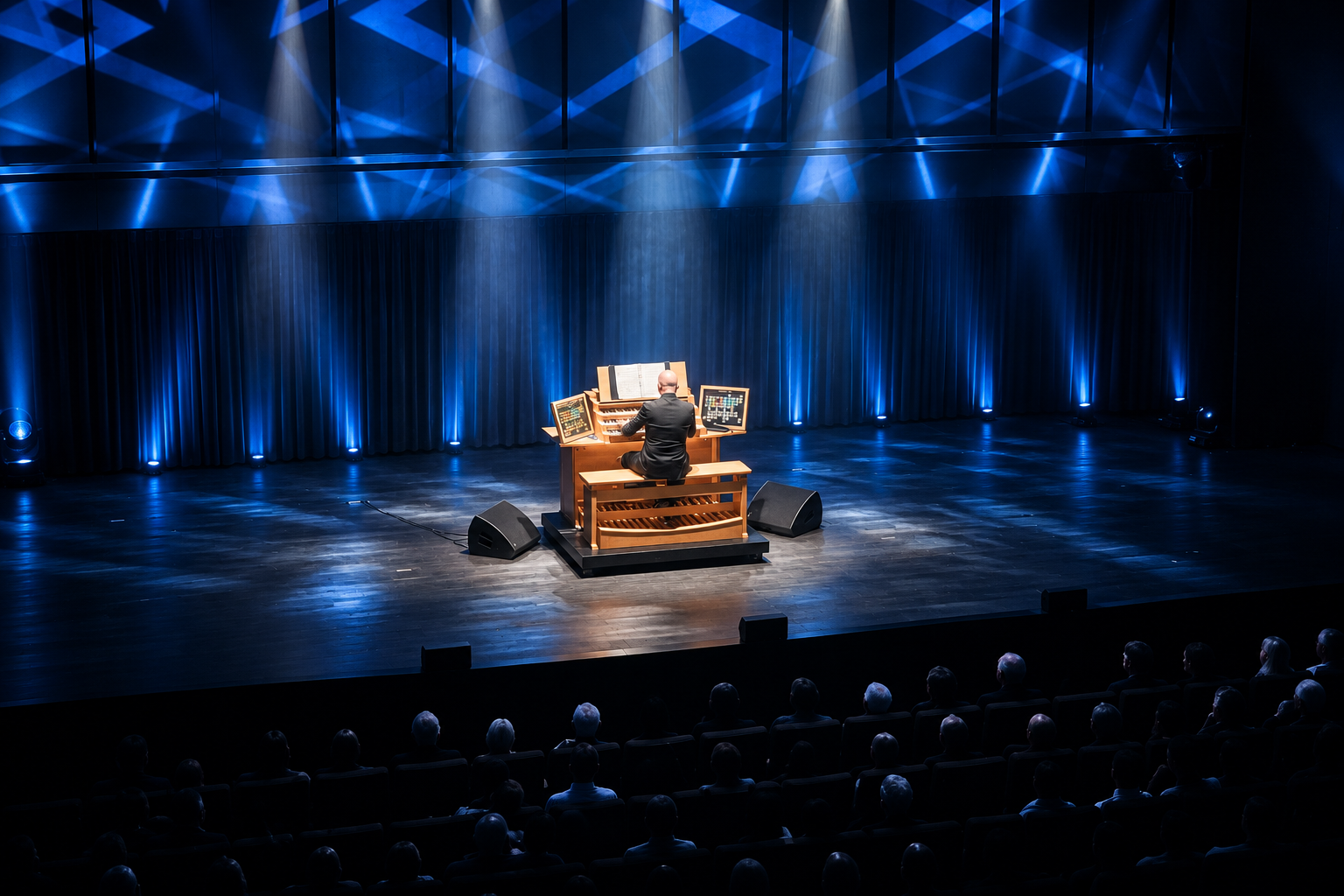
BERGSON 360°
ORGEL-KLANGLABOR
Der „klügste Konzertsaal Europas", unser Elektra Tonquartier, versteht sich als Experimentierfläche: Wir wollen Komponisten und Musikern ein Setting auf der Höhe der Zeit bieten. Nicht als Selbstzweck, sondern um klangliche Dimensionen auszureizen und so das Publikum neu zu begeistern. Orgelsound 360° ist dabei ein Leuchtturm-Projekt, dessen Erfolg bei den Zuschauern für sich spricht. (Maximilian Maier, Künstlerischer Leiter Bergson)
Das Bergson Kunstkraftwerk entstand aus der Vision der Brüder Christian und Michael Amberger, die seit 2005 das ehemals devastierte Aubinger Heizwerk erworben und es aus einer Industriebrachfläche zu einem privat finanzierten Kulturort transformiert haben. Auf Basis eines umfangreichen Umbaus durch das Büro Stenger2 und eines klaren kulturpolitischen Konzepts entwickelte sich der Bau ab etwa 2019 programmatisch zum „Bergson Kunstkraftwerk“ mit Galerie, Konzertsaal, Jazzkeller und Gastronomie als neuem kulturellen Gravitationszentrum im Münchner Westen.
Der Konzertsaal des Bergson, das Elektra-Tonquartier, verfügt über ein ausgeklügeltes Soundsystem des Akustikbüros Müller-BBM München, welches mit 25 Mikrofonen und 80 im Saal verteilten Lautsprechern Raumwirkungen vom trockenen Jazz-Club in Chicago bis zur Kathedralakustik von Notre Dame in Paris ermöglicht.
Nach Gründung dreier eigener Klangkörper, der Bergson Phil, der Bergson Voices und der Jazzrausch Bigband fehlte nur noch ein klangliches Medium, über welches fast alle großen Konzerthäuser weltweit verfügen: Eine große Orgelanlage.
Und so wurde die Idee geboren, die aktuellen Errungenschaften und den technisch allerhöchsten Standard von gesampleten Orgeln aus aller Welt, welche durch das HAUPTWERK-Orgelsystem ermöglicht wird, ins Bergson zu holen und damit zu experimentieren.
Der Start dieses Projekts fand im November 2025 mit einem ausverkauften Konzert im Rahmen von „100 Jahre Bachfest München“ statt, welches zugleich das 99. Bachfest der Neuen Bachgesellschaft Leipzig und von Hansjörg Albrecht nach München geholt worden war. Das Equipment in Form eines viermanualigen Orgelspieltisches und die entsprechenden Sample-Sets stellte das Orgelhaus im Stiftland (Waldsassen) zur Verfügung, dessen Gründer und Inhaber das HAUPTWERK-System auch vertreiben, inzwischen europaweit u.a. Orchester damit beliefern und stetig an einer immer weiteren Vervollkommnung des Systems arbeiten.
Auf dem Programm standen ausschließlich Bach-Highlights als Originalwerke und Transkriptionen. Um die klanglichen Möglichkeiten des neuen Orgel-Experimentalprojekts vorzustellen, wählte Hansjörg Albrecht als neuer Bergson Principal Organist Sample-Sets der Top five des Orgelbaus aus und holte damit klanglich die internationale Orgelwelt vom 18.-20. Jahrhundert ins Bergson. Die Instrumente waren:
Deutschland: Freiberg, Stadtkirche St. Petri | Gottfried Silbermann
Niederlande: Zwolle, Grote Kerk | Arp Schnitger
Frankreich: Caen, Kathedrale | Aristide Cavaillé-Coll
England: Hereford, Cathedral | Henri Willis
USA: Pasadena, NN | Ernest Skinner
Aus dem Erfolg dieses ersten Konzertes wurde eine eigene Orgel-Experimental-Konzertreihe, in der vor allem Transkriptionen von Orchester- und Klavierwerken die tausendfachen klanglichen und akustischen Möglichkeiten des Elektra-Soundsystems auf eindrucksvolle Weise zur Geltung bringen. Das Publikum, welches inmitten des Raumklangwunders sitzt, wird von einem Gesamtorgelklang umfangen, wie er bisher in keinem Konzertsaal und nur in wenigen, ausgewählten Kathedralen weltweit erlebbar ist. Und das Bergson-Novum ist: Die technisch besten und interessantesten gesampelten Orgeln der Welt sind hier zu erleben.
Programme seit 2026
30.01.26 Wagner: Szenen aus dem Ring | England: Hereford (Willis)
16.05.26 From the New World: Ives, Gershwin, Dvorak | England: Hereford (Willis)
18.10.26 Bach: Goldberg-Variationen | Niederlande: Zwolle (Schnitger)
28.11.26 Weihnachten: Vierne, Humperdinck, Tschaikowsky, Dupré | Frankreich: Caen (Cavaillé-Coll)
07.03.27 Glanz & Gloria: Händel
04.06.27 Bilder einer Ausstellung: Mussorgsky, Rachmaninow, Stravinsky